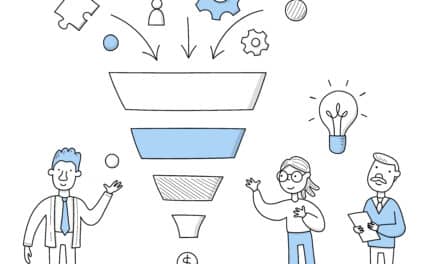
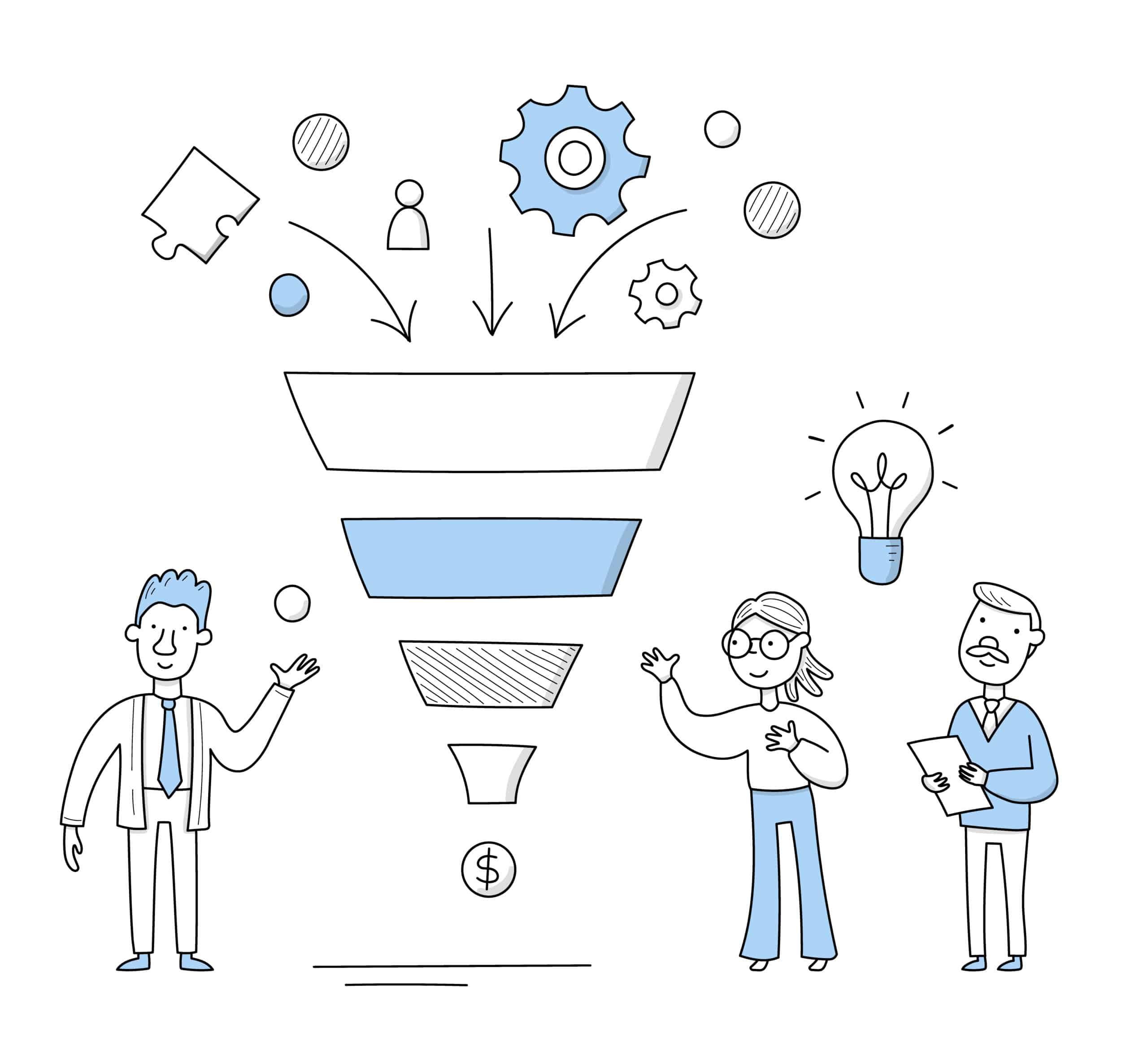
An AI-powered sales funnel uses machine learning, automation, and real-time data to guide prospects from awareness to purchase and beyond. Unlike traditional funnels, it adapts automatically to buyer behaviour, cutting manual effort and boosting conversion rates for Australian businesses of all sizes.
Let’s be honest. Most Australian SMEs are still running sales funnels that were designed for a different era. Static email sequences. Spreadsheet-based lead tracking. Follow-up calls made on gut instinct. It worked then, but in 2026, buyers expect more. According to HubSpot, over 67% of Australian B2B buyers now expect personalized outreach before they even raise their hand. Meanwhile, businesses using AI-driven funnels are closing deals up to 30% faster than those relying on manual processes. This guide walks you through exactly how to build an AI-powered sales funnel in five clear, practical steps, from mapping your buyer’s journey to keeping customers coming back for more. Whether you’re running a Sydney-based SaaS startup or a Perth professional services firm, this is your 2026 playbook.
Traditional vs. AI-Powered Sales Funnels: A Quick Comparison
Step 1: Mapping the Modern Journey for Your AI-Powered Sales Funnel
Before any AI tool can do its job, you need a clear map of how your buyers actually behave, not how you wish they did. Step 1 is about documenting every touchpoint, channel, and decision moment so your AI has the right foundation to work from.
You can’t automate what you haven’t understood. This is the step most businesses skip, and it’s why their AI investments underperform.
Start with Real Buyer Data
Talk to your last 10 customers. Ask them: Where did they first hear about you? What made them hesitate? What finally pushed them to buy? This qualitative data is gold; it’s the zero-party data that AI tools need to build accurate buyer personas. Zero-party data is information your customers voluntarily share, such as preferences, intentions, and context. In Australia, it’s also your safest data to work with under the Privacy Act 1988, which governs how businesses collect and use personal information. Relying on zero-party data reduces compliance risk and tends to produce far better AI personalization results.
Map Your Full Funnel
Once you’ve gathered that insight, document the stages your buyers move through:
Awareness: How do they find you? Google? LinkedIn? Word of mouth?
Consideration: What content do they consume before making contact?
Decision: What objections come up? What pushes them to say yes?
Onboarding: What happens in the first 30 days after they buy?
Retention: What keeps them coming back? What makes them leave?
Tools like HubSpot, Salesforce, or ActiveCampaign all support visual journey mapping, and most offer AUD pricing for Australian businesses with AEST/AEDT business-hours support options. Once your journey is mapped, you have a clear blueprint. Now the AI has something meaningful to optimize against.
Step 2: Implementing Agentic Lead Capture in Your AI-Powered Sales Funnel
Agentic lead capture uses AI tools that act autonomously, responding to website visitors, qualifying prospects, and booking meetings without human intervention. It’s the digital equivalent of having a sales rep on call 24/7, including weekends and AEDT time zones.
Your website is working around the clock, but is your lead capture? If your contact form sits idle until Monday morning, you’re losing warm prospects to competitors who respond in minutes.
AI Chatbots & Conversational Landing Pages
Modern AI chatbots (like Drift, Intercom, or Tidio) don’t just answer FAQs; they qualify leads, personalize conversations based on the visitor’s source, and book meetings straight into your CRM. For an SME in Brisbane or Melbourne, this is transformative. Set your chatbot to:
Ask qualifying questions (budget, timeline, company size)
Detect buyer intent based on pages visited and time on site
Route high-intent leads immediately to a sales rep or a calendar link
Capture zero-party data by asking about goals and pain points directly
Intent Data & Behavioural Signals
Platforms like Bombora or 6sense track which Australian companies are actively researching your category online, even before they visit your site. This is called third-party intent data, and it lets you reach out to buyers at exactly the right moment. A word of caution: always ensure your data practices comply with the Privacy Act 1988 and the Australian Consumer Law (ACL). Be transparent about how you collect and use data, include clear opt-out mechanisms, and avoid storing unnecessary personal information. The Office of the Australian Information Commissioner (OAIC) takes these obligations seriously, and so should you.
Step 3: Automating Nurture & Hyper-Personalization with an AI-Powered Sales Funnel
AI nurture automation delivers the right message to the right person at the right time automatically. Instead of sending the same email to your entire list, AI segments audiences in real time and tailors content based on behaviour, industry, and buying stage.
Think about the last generic “just checking in” email you received. Did it make you want to buy something? Probably not. Your prospects feel the same way.
Dynamic Email Sequences
Platforms like ActiveCampaign, Klaviyo, or Marketo use machine learning to send emails when a specific prospect is most likely to engage based on their past behaviour. Open rates for AI-timed emails outperform static scheduled sends by up to 41%. Your AI nurture system should:
Trigger sequences based on actions (visited pricing page, downloaded a guide, watched a webinar)
Adjust messaging tone and content based on industry or company size
Pause sequences when a lead goes cold and re-engage with a different angle
Escalate to a human rep when specific signals suggest the prospect is ready to buy
Personalization at Scale
True hyper-personalization goes beyond using someone’s first name. AI tools can dynamically adjust website copy (via tools like Mutiny or RightMessage), change the case studies shown to a Melbourne-based prospect vs. one in Perth, and even adjust pricing pages for different industry verticals. For Australian B2B businesses, this is particularly powerful. A Sydney tech buyer and a rural Queensland agri-business owner have very different needs, and your funnel should reflect that without your team writing dozens of different sequences manually.
Step 4: Predictive Scoring & Real-Time Closing in an AI-Powered Sales Funnel
Predictive lead scoring uses AI and propensity modelling to rank your leads by their likelihood to convert. Instead of chasing every inquiry equally, your sales team focuses only on the hottest prospects, those most likely to buy, and buy soon.
Your sales team’s time is your most expensive resource. Every hour spent on a low-quality lead is an hour not spent closing a deal that was already half-won.
What is Propensity Modelling?
Propensity modelling is a statistical technique where AI analyses historical conversion data to predict which current leads are most likely to become customers. It factors in firmographic data (company size, industry, revenue), behavioural signals (email opens, page visits, content downloads), and contextual timing (budget cycles, recent funding rounds, hiring activity). In practical terms, your CRM surfaces a score for every lead. A score of 85/100 means the AI predicts an 85% likelihood of conversion. Your reps call that lead first.
Real-Time Closing Triggers
Set up your AI to alert reps the moment a lead exhibits high-intent behaviour:
Visited your pricing page three times in 48 hours
Opened a proposal and forwarded it to a colleague
Watched a product demo video to completion
Returned to your site after a 30-day gap (re-engagement signal)
Tools like Salesforce Einstein, HubSpot AI, or Gong.io provide these triggers natively. For Australian SMEs with tighter budgets, Pipedrive with AI add-ons is an accessible entry point, with pricing starting from around AUD $25–$65 per user per month.
Top AI Sales Tools for Australian Businesses in 2026
Step 5: Post-Purchase Retention via an AI-Powered Sales Funnel
The best AI-powered sales funnels don’t stop at the sale. Post-purchase AI automation onboards customers faster, identifies churn risk early, and creates personalized upsell and cross-sell opportunities, turning one-time buyers into long-term advocates.
Here’s a stat that should change how you think about your funnel: acquiring a new customer costs five to seven times more than retaining an existing one [2026 Bain & Company Retention Stat]. Yet most businesses pour their AI budget into the top of the funnel and neglect what happens after someone signs up.
AI-Powered Onboarding
Set up automated, personalized onboarding sequences that:
Trigger based on what features or services a customer has (and hasn’t) used
Surface relevant tutorials, guides, or check-in prompts at the right time
Flag struggling customers to your success team before they churn
Churn Prediction
Tools like ChurnZero, Totango, or Gainsight use AI to monitor customer health scores in real time. If engagement drops below a threshold, the system automatically triggers a re-engagement sequence or alerts a customer success manager. For a Melbourne-based SaaS company or a Sydney IT services firm, this alone can recover thousands of dollars in monthly recurring revenue.
AI analyzes purchase history, usage data, and firmographic signals to identify the right moment to introduce a new product or service tier. Rather than blasting a generic upsell email to your entire customer base, your funnel delivers a contextually relevant offer to the right customer at the right time. For instance, if a Perth-based accounting firm on your platform starts adding users rapidly, that’s an AI-detected signal that they may be ready for an enterprise tier upgrade. Your system can reach out automatically or alert a rep to make a personal call.
Conclusion: The Future of Your AI-Powered Sales Funnel in Australia
AI-powered sales funnels are no longer a competitive advantage reserved for large enterprises. In 2026, they are the baseline for any Australian business serious about scaling sustainably, and the tools to build them are more accessible and affordable than ever before.
Here’s the truth about where we’re headed: AI isn’t going to replace your sales team. But your competitors who use AI will outpace those who don’t. The businesses winning in 2026, from Surry Hills startups to Gold Coast agencies, are the ones that have stopped treating AI as a bolt-on and started building it into the core of how they sell.
The five steps we’ve covered give you a complete framework:
Map your buyer journey with real data
Capture leads with agentic, always-on AI tools
Nurture with hyper-personalized, behaviour-triggered sequences
Score & close using predictive modelling and real-time triggers
Retain customers with post-purchase AI automation
As you build, keep compliance front of your mind. The Privacy Act 1988 is under active review, with stronger data rights for Australians expected in the coming years. Building your AI funnel on a foundation of consent, transparency, and zero-party data isn’t just good ethics; it’s good strategy.
The technology is ready. The tools are affordable. The question now is simply: when will you start?
FAQ: AI-Powered Sales Funnels for Australian Business Owners
1. How much does it cost to build an AI-powered sales funnel in Australia?
You can get started for as little as AUD $100–$300 per month using tools like ActiveCampaign, Pipedrive, and Tidio. A more robust mid-market stack (CRM + AI scoring + nurture + chatbot) typically runs AUD $800–$2,500 per month. Enterprise setups with Salesforce Einstein and Gong can exceed AUD $5,000+ per month. The ROI usually justifies the spend within 3–6 months for businesses with a consistent deal flow.
2. Is using AI in my sales funnel legal under Australian privacy law?
Yes, provided you follow the principles of the Privacy Act 1988 and the Australian Consumer Law (ACL). This means being transparent about what data you collect, obtaining proper consent, giving customers the ability to opt out, and not using data in ways that are unexpected or deceptive. Relying on zero-party data (information customers willingly share) is the safest and most effective approach.
3. Do I need a developer to set up an AI-powered sales funnel?
Not necessarily. Most modern platforms, such as HubSpot, ActiveCampaign, and Intercom, are designed for marketers, not developers. You can build a fully functional AI funnel using no-code workflows, native integrations, and pre-built templates. For more advanced customization (custom propensity models, API integrations), a developer or a specialist agency will speed things up significantly.
4. How long does it take to see results from an AI-powered sales funnel?
Most businesses see meaningful improvements in lead qualification and follow-up speed within the first 30–60 days. Conversion rate improvements typically become measurable at the 90-day mark, once the AI has enough data to optimize against. Post-purchase retention improvements can be evident even sooner, especially if you address obvious gaps in your current onboarding process.
5. What’s the biggest mistake Australian SMEs make when implementing AI funnels?
The most common mistake is jumping straight to tools before mapping the journey. Businesses purchase an AI platform, connect it to their CRM, and expect magic without first understanding their buyer’s path, qualifying criteria, or what constitutes a good lead. AI amplifies what you give it. If you feed it a poorly defined process, it will automate that poor process at scale. Always start with Step 1: map before you automate.
This article was written for informational purposes. Tool pricing is approximate and subject to change. Always verify current AUD pricing directly with vendors. For personalized advice on building an AI-powered sales funnel for your Australian business, contact us